Work / Curation · 2013 - 2020
The Shot I Never Forgot
‘The Shot I Never Forgot’ is an Arts Council funded project in which participating artists were invited to share a photograph that has remained in their mind since they shot it along with the story behind its creation. Most of the artists instinctively knew which image they should share, sometimes because it was poignant, sometimes because of its personal significance or simply because it is a great photograph.
As photographers, we shoot many more images than ever see the light of day, often including fabulous stand alone pictures – shot on instinct – whilst making work for another project. Because these single images do not fit the brief, they sit gathering dust in an ever-growing archive. The Shot I Never Forgot is a chance for some of these images to be presented in their own right, for others to enjoy; a platform to enable some of these memorable photographs to be seen for the first time.
This project began in February 2013 and culminated in an exhibition and publication, held during the Brighton photo Fringe 2014. Since then, it has been lying dormant, ocassionally being dusted off to receive some new submissions!
John House, February 2018

“I was 22 and living in New York, finding my feet as a photographer. I would often take the F train down to Coney Island where I’d wander up and down the Boardwalk, too scared to approach anyone but happy to observe what was going on around me. I had my Dad’s old Pentax 35mm and got through roll after roll of b/w film. I could have picked many images from that year in NYC. I was sent all over the place to take photographs for the Time Out Guide to New York. A dream job for an aspiring photographer just starting out. There were many memorable moments – photographing a crazy gay club in Chelsea, spending hours trying to track down an Italian fruit and veg seller in the Bronx, an evening in a smoky Latino jazz club…but this image always stayed with me. Although I loved being in the darkroom, I’ve never been a great printer and I remember getting frustrated trying to print this well. It reminds me of a specific time in my life when I was discovering the joy of photography. When I look at it, I see the innocence of the kids’ expression, the fact that there’s no Mum, just a Dad with his family on a day out, dressed in the Hasidic Jewish way with the Wonder Wheel in the background.”
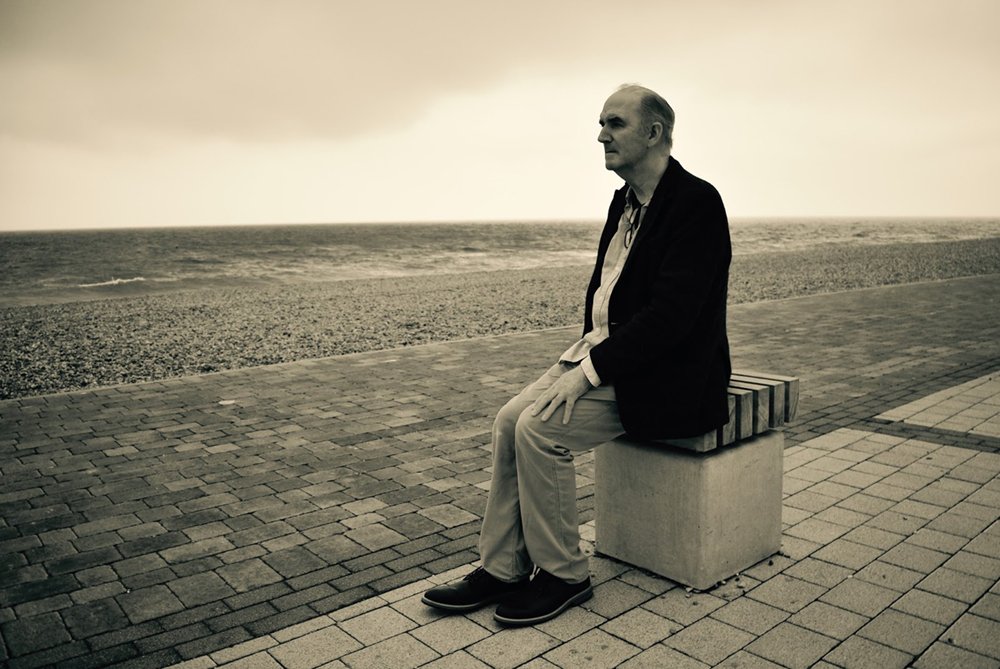
At the time of contact, Stuart was in hospital, but kindly agreed to participate with the help of his Mum Linda, who said of this image: “Stuart has chosen this photograph from when he first met Tim Andrews in Brighton. Tim suffers from MS and wanted to meet Stuart because he is trying to get a number of photographers to take his portrait . Stuart and he got on very well together and spent an enjoyable couple of days. Stuart is in a wheelchair post stroke (2015). This left him with no use of his right side and no speech. However they managed to communicate really well.”

“My interest in photography started at secondary school. There was a cleaners cupboard that had been converted into a darkroom, a darkroom that didn’t work. There was no paper and the chemicals were rotten, years out of date. The wonderful thing about this place however was that it meant that I could hide, that I could spend an hour every day, in those last few months of school away from everyone else. without the least exaggeration, that tiny room was my salvation. Because of this when I started at the local technical college the following September I opted to do a photography course. This picture is one of the enlargers I used in those first few months of learning all about photography. I made this picture around eight or nine years ago, I went back to the technical college, back to that darkroom just before they tore it down. I spent countless hours in that room, it was the place where I started becoming me.”
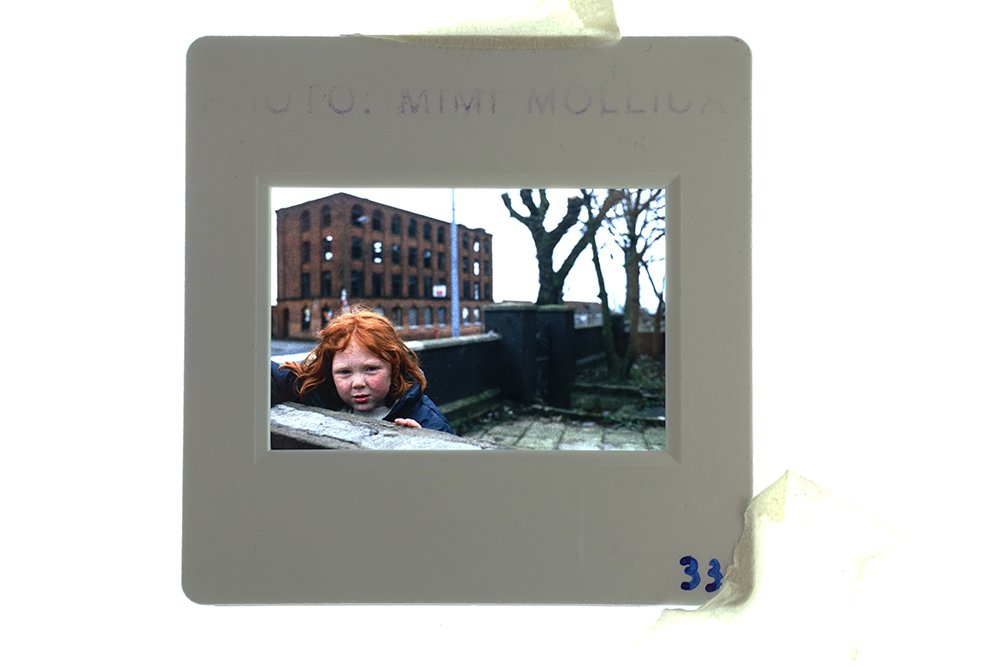
“20 years ago I travelled to Belfast on my very first assignment. I was sent to Northern Ireland from a german magazine to photograph the socio-political divide and complex relationship between two girl friends, one catholic and one Protestant. Although, I never been to Belfast before, I felt at home most probably because both Palermo and the Northern-Iish capital share the same tormented past and a deep inner conflict. Falls road reminded me of the most deprived areas of my beloved Palermo and it’s there that I found this young girl playing on the streets against the backdrop of an abandoned building bearing the signs of a traumatic past. She remained for me a symbol of defiance against the social injustice.”

‘Peru, 2006’ “This photograph was taken on a trek that I embarked on in 2006 to raise money and awareness for Cancer Research UK after the loss of my father. I travelled with a group of people who I’d not met before but who shared the experience of the loss of a loved one. My companion for the trip was my Mamiya 7 II camera and over the 10 day trek I took a lot photographs of my journey. It was a joyous and emotional experience and gave time for reflection. The boy was from a small village we passed through on our way to Machu Picchu. Perched on a rock he sat watching us inquisitively as we walked by. I was struck by his looks and his clothing set against the subtle tones of the landscape. I was usually at the back of the trekking group due to taking too many pictures and on this occasion I was able to communicate with the boy to take his portrait. I managed to shoot a frame with him before he ran off hastily. The picture brings together elements of photography that I enjoy and is a simple reminder as to why I like to make pictures. I’m aware that I’m drawn to the image because of its sentiment but I’ve learnt to realise that its ok to incorporate this into your work which remains part of my practice. The image is a moment of calm and more importantly connection in what I recall as quite a chaotic & very emotional period of my life.”
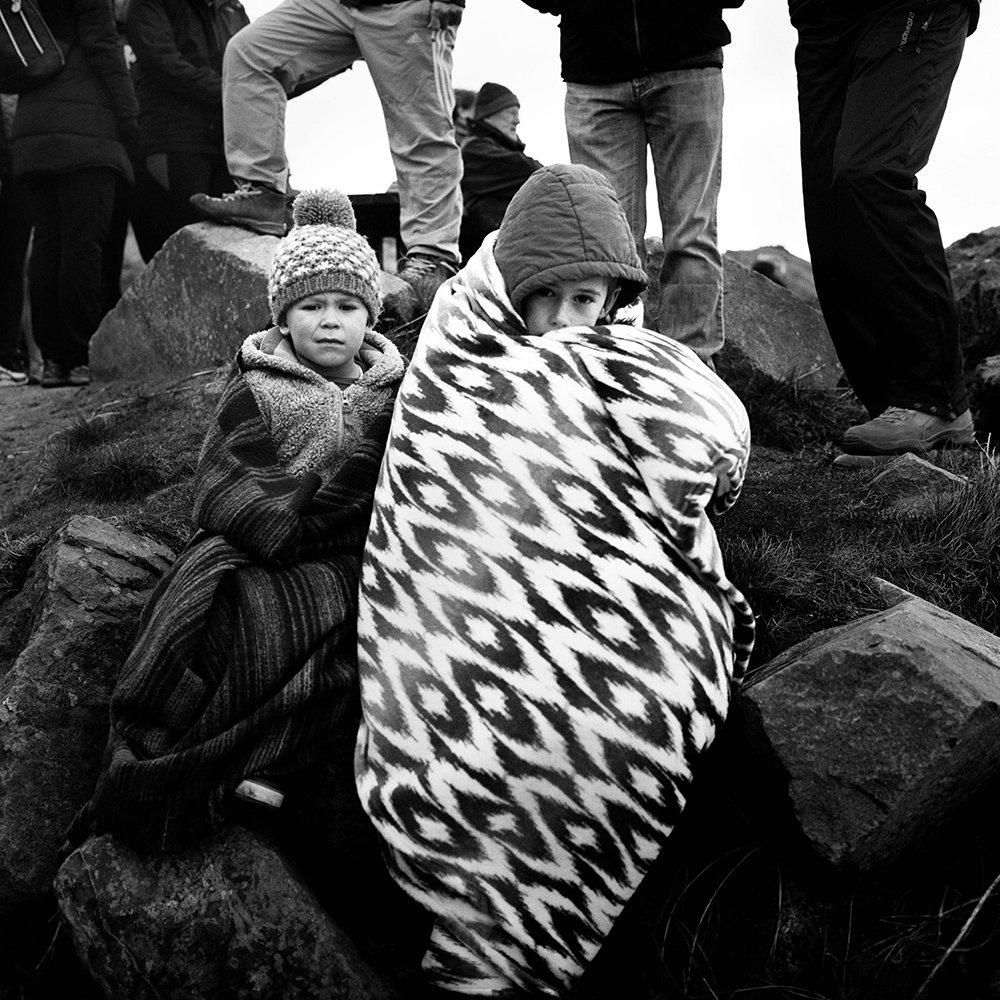
‘Kids on Beach, 2017’ “This image was taken on New Years day 2017. It’s taken from a short story I shot on the 50 or so people that every year brave the icy waters and freezing temperatures to partake in the New Years Day swim at Whitesands Bay, Pembrokeshire. I shot about 10 rolls of TriX that day, but unbeknown to me, my Hasselblad had a light leak and as a result a number of portraits where damaged. Thankfully this was one of the survivors. As soon as I got to the beach, I was immediately drawn to these 2 children huddled up under a mountain of blankets trying to keep warm whilst their dad partook in the swim and the whole world seemed to carry on around them. As I approached to take their portrait they didn’t move an inch, just sitting there staring straight at me with their eyes piercing down my lens. I took just one frame and then moved on.” It was a fleeting moment, but one that has stuck with me ever since and is an image that I have found myself returning to ever since.”
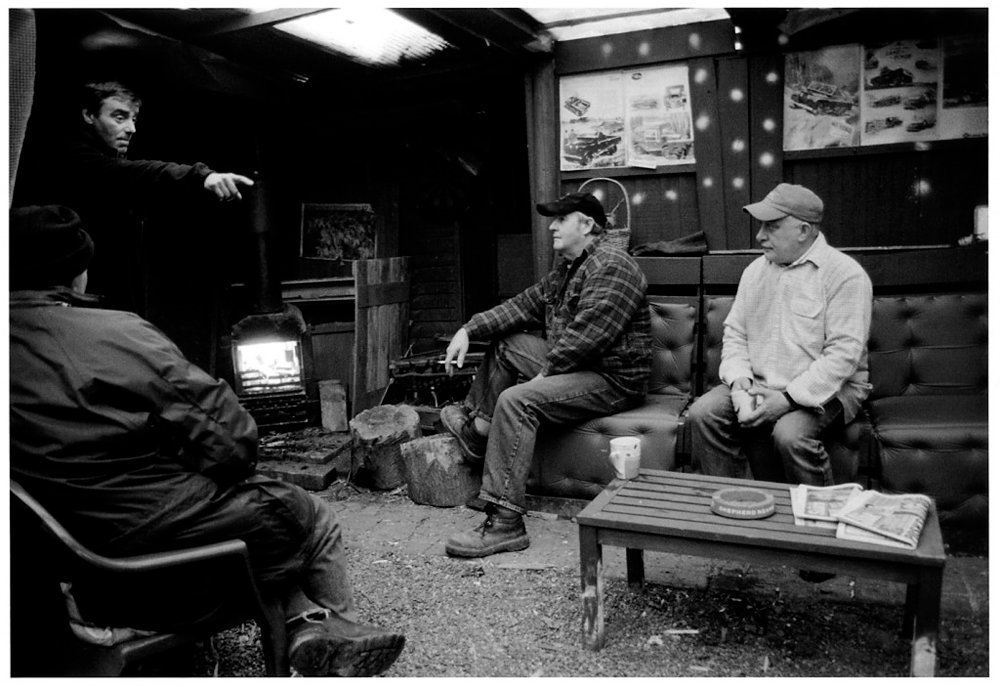
‘Hot Food Next Lay-by‘ “Looking at this photo now it seems hard to believe that it is one of my own – there are so many elements here that are now redundant to my practice. I haven’t carried a 35mm camera for the best part of a decade. I rarely, if ever, shoot in black & white and people are almost always absent from my more recent work. But the real reason that this photo has stayed with me for so long is not nostalgia; it is because, like all the photographs that intrigue me, this photo has an air of ambiguity. I more of less know the back story to this photo but somehow the facts don’t quite fit with the image. The Shepherd Neame ashtray and Sun newspaper, placed on the coffee table, offer some clue to the location but the space isn’t your typical café and the characters within don’t belong to the Sussex coast. The scene is theatrical but who or what is being picked out and why? Is this some kind of a club and are those posters of military vehicles significant? The photo throws up more questions than it seems willing to answer, inviting the reader to decipher the clues and draw their own conclusions.”
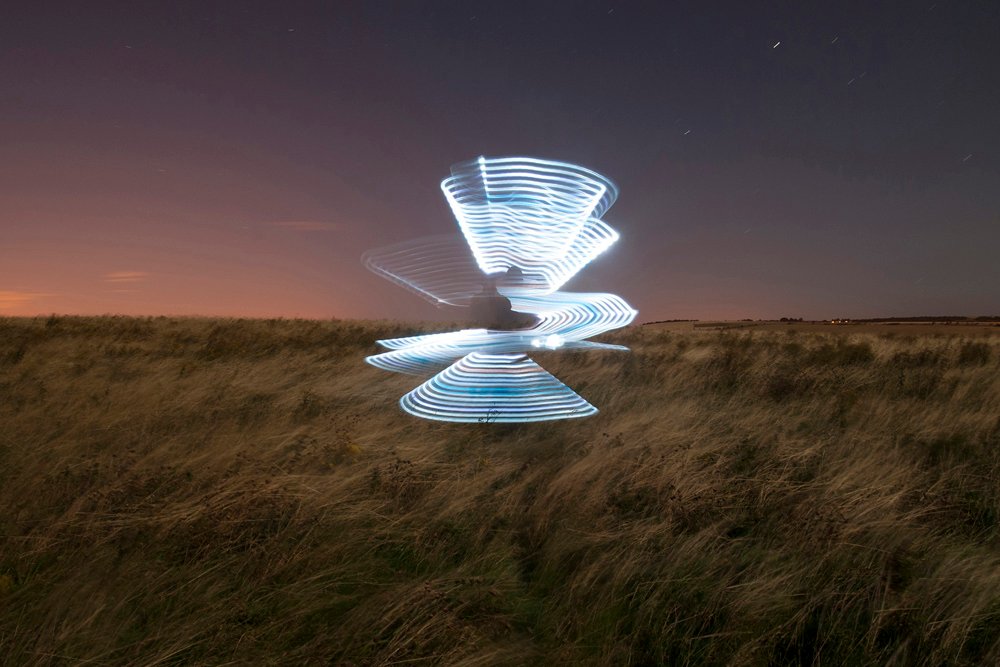
‘Samurai’ 2009 “This was late one night in September 2009, my first test using a light wand that I’d put together from pound shot parts. Standing in a field, with only the moonlight to see by is quite a spiritual experience, and the level of concentration and the smoothness of the moments involved in this shot reminded me of a martial artist practising. I ended up pursuing a different strand, where I walkied through the shot spinning the wand as I went, but I always hankered back over this one.”
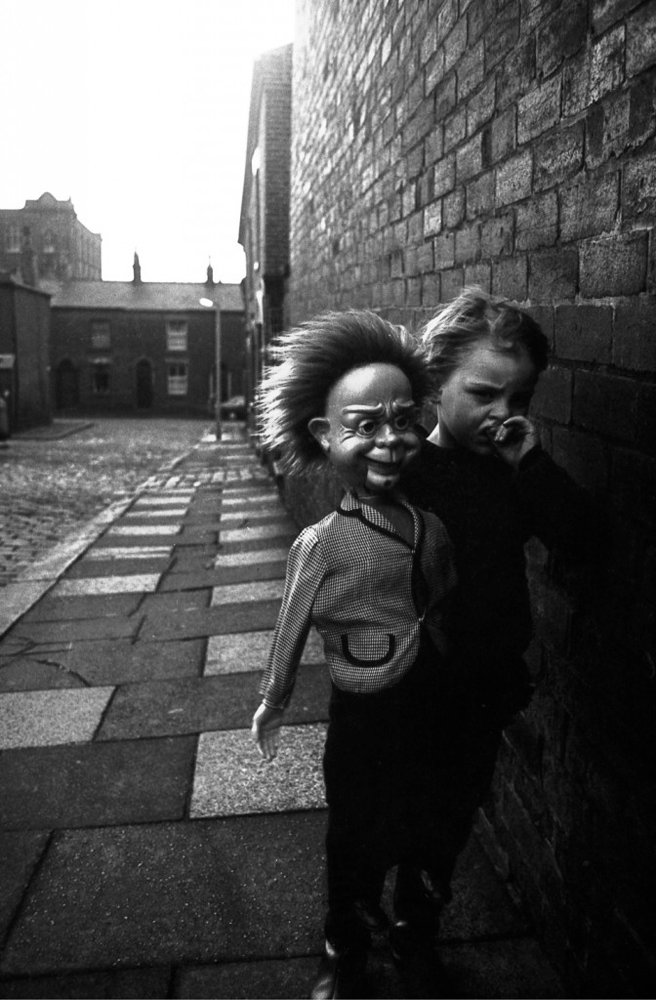
‘Oldham, 1970’ “Everything is changing. The streets are being demolished, the mills and factories are closing. Families and friends who grew up together are being split apart. This is the third of a sequence of photographs, in the previous two, the little girl is unaware of me and is walking along happily talking to her doll. I’ve obviously scared her. It’s a shot I wouldn’t take today. Someone recently pointed out the similarity of their eyebrows. I hadn’t noticed that before.”

‘Rufford Colliery, Mansfield. 1992’ This picture is from a series made in 1992 called The Dignity of Labour, for which I photographed some of the more ‘challenging’ professions in Britain. I’d always wanted to visit a working coal mine and this was probably my last chance; Rufford Colliery, situated about five miles northeast of Mansfield, was one of the last surviving pits in Nottinghamshire, not to mention Britain. The men knew their mining days were numbered, and there was much anger and disappointment in the rank-smelling air at the coalface. In the preceding weeks I’d been reading the complete works of D. H. Lawrence and my mind was full of the romance of it all. But my day at Rufford Colliery put paid to that; this was a tough job, probably the toughest of all those I photographed throughout the project. That said, only last week I met a man in Stoke-on-Trent who had spend thirty years as a miner, before losing his job in 1991. Without hesitation he declared he’d go back tomorrow, if only he could. Coincidentally, a few days before, in the same city, I chanced upon this poignant quote from John D Rockefeller, engraved into a modest monument to (former) Stoke steelworkers: “I believe in the Dignity of Labour, whether with head or hand; that the world owes no man a living but that it owes every man an opportunity to make a living”.
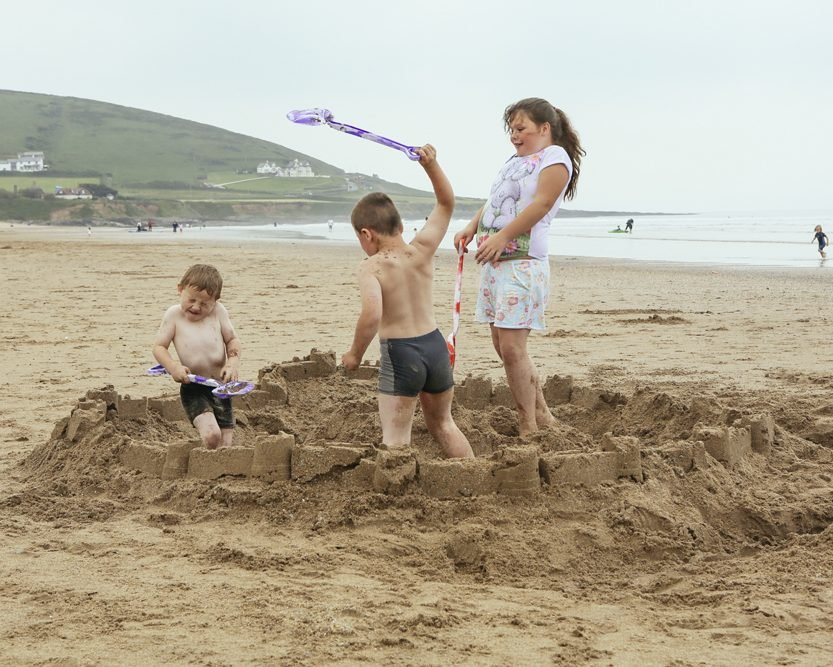
“I was shooting a time-lapse of the construction of a sand castle and planned to record the sea washing it away afterwards. Unfortunately I read the tide table wrong and the incoming water stopped just short of the castle! A little annoyed I just left the camera running, a group of children showed up and started wrecking the castle and this was one of the resulting frames. What looks like the capture of a decisive moment is just serendipity.”

‘New York Church, 2008’ “This image was made in New York, 2008 round the corner form a hostel I was staying at just off the Northwest corner of Central Park. For me it feeds my curiosity with the power and limitations of the photographic image and with North America. The bright neon lights seem at odds with the railings, locked cabinet and humble lettering that details the various weekly activities taking place at the church. Similarly this selection of events is both inviting and inclusive at the same time as serving as a reminder of American history. It would be disingenuous to suggest this image was carefully considered, in fact I am often frustrated to recall my eagerness to make the image above experiencing the scene in person. As I continue returning to this image it continues to confuse me, gradually becoming alien – perhaps this is why it has never found a true home in any collection or grouping of images. “
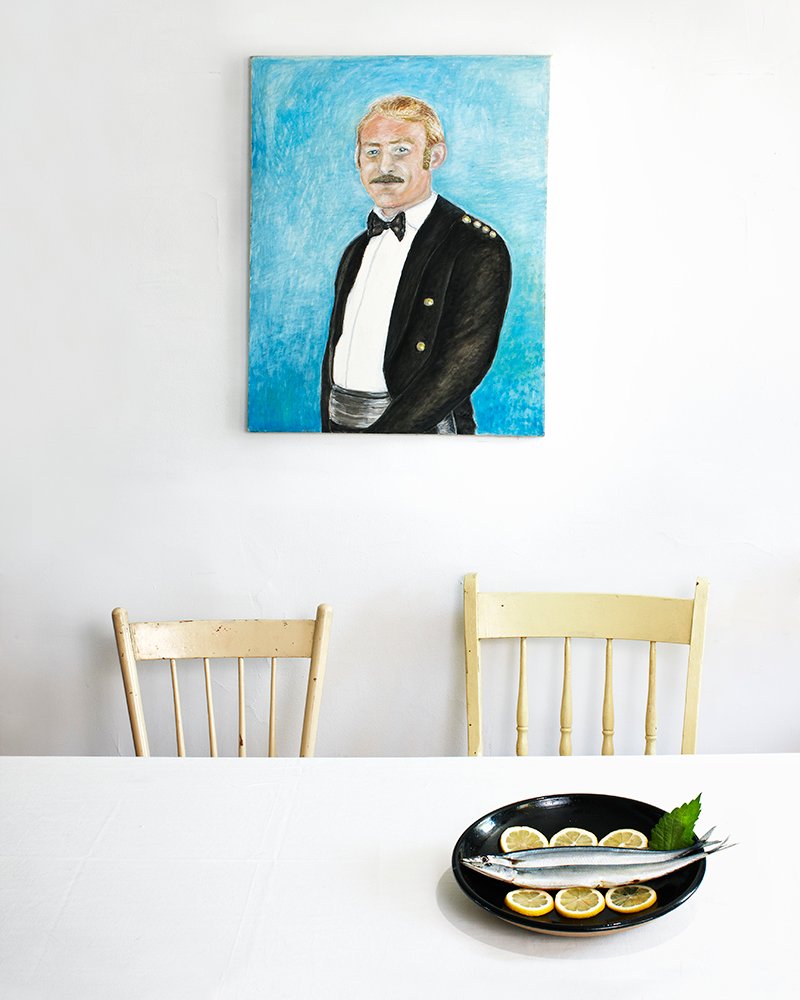
“The image was made the day before I was moving to a new home in North Brooklyn. The old apartment was pretty much all cleaned up, with only a few pieces of furniture left. My boyfriend came to help me move and we ate the mackerels for dinner. The next day, we started living together. If this story is boring, people should make up their own story. It can be whatever they like.”

“I often come back to a photo I took of a young girl named Emily. It was after a parade in the city, and we were in Central Park and she was walking with her family, transitioning from the activity of the day and the public realm back to the a more private frame of mind. We met there, psychologically, and the photo happened very quickly. It was a quiet but real connection and was one of the first times I felt successful in communicating the honest quality of the moment. Maybe I see myself in her, or perhaps it is just that the photo combines many elements that I appreciate in photography, but somehow the memory of the meeting, and the image, stay with me as one in the same.”
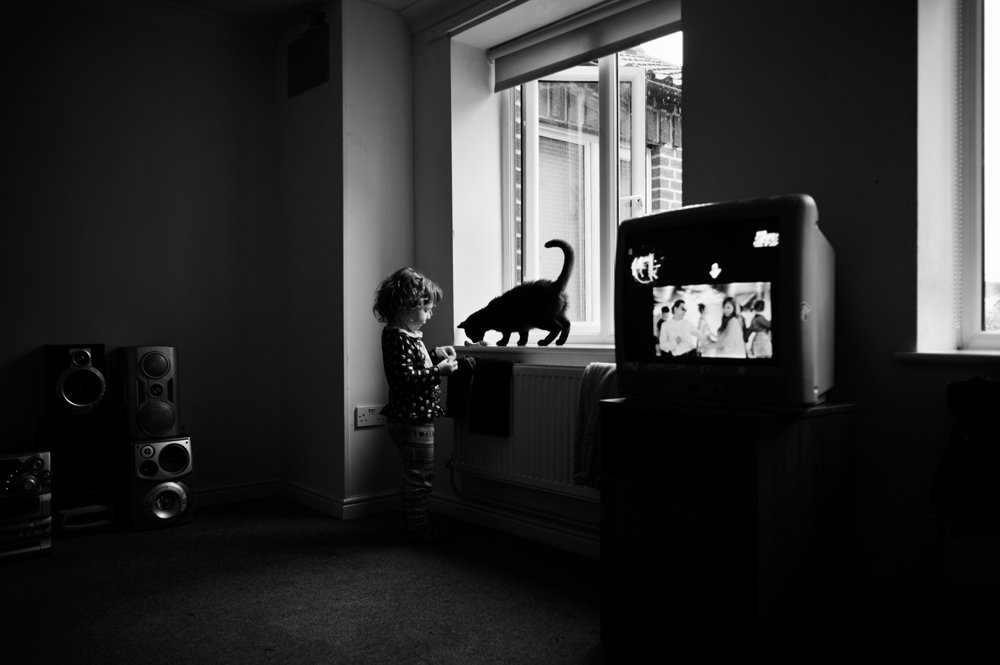
“I’d been working on a story for Small Town Inertia dealing with young families and social housing. After a couple of visits, getting to know the family, as often happens, they were suddenly moved and contact unfortunately lost. This photograph, of the families young daughter feeding a stray cat, really stayed with me, these two young lives looking after one another, whilst both displaced, searching for a place to call home. “

Purple Fleece, Falmouth, 2009’ “While in my last year at University College Falmouth I spotted this woman in her purple fleece sat outside my house. I was on my way home at the time in the middle my final major project and wondering if I would ever be happy with it. Upon seeing this woman it suddenly felt right to run and get my camera asking her if I could take her picture. She agreed so I set up my 5×4 Wista Field camera on the pavement. The sun was blazing straight onto her face which is why she could barely keep her eyes open but I didn’t mind that. I was simply inspired to take her photograph and that feeling hadn’t happened for a while since I was trying to force creativity upon my University work. From that point on I changed my project’s direction to photograph some local fire fighters rather than continuing with a project about people on the night shift. This was certainly a turning point for me and there is no doubt that this woman in her purple fleece was the catalyst for it. I often refer back to this image in my mind and although I haven’t looked at it much over the years I have thought about it a great deal. So if you are in the middle of a project that you feel is going nowhere or maybe you are yet to start then find a woman in a purple fleece to photograph.”
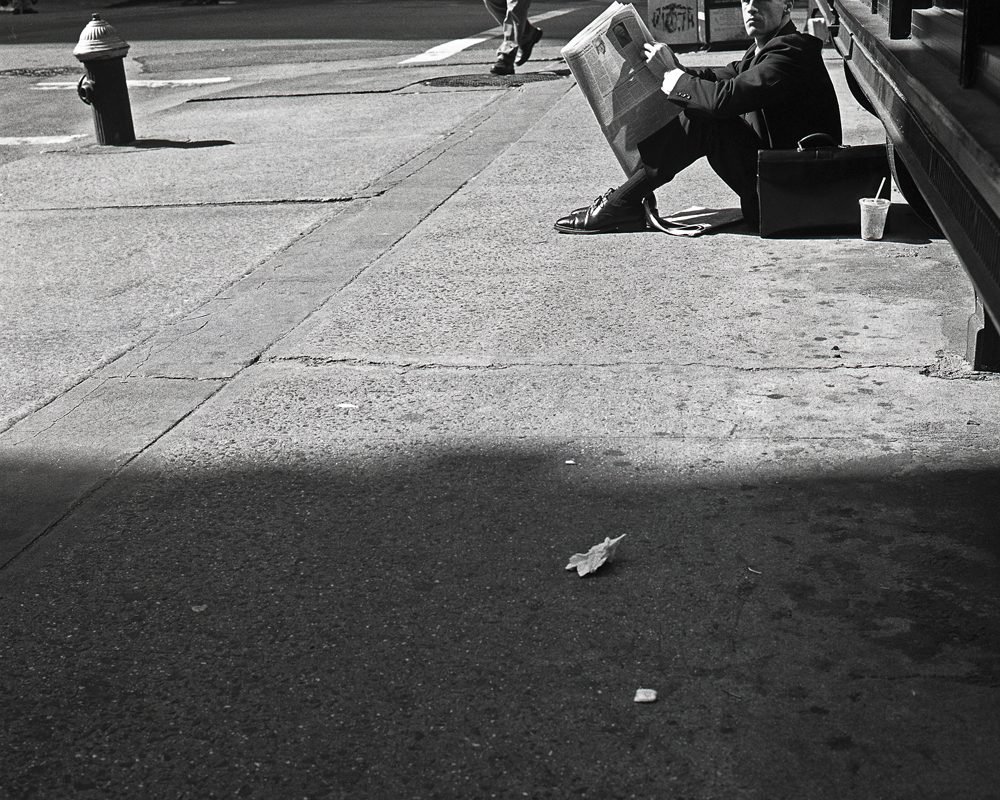
“You shouldn’t be looking at this image. Or, more precisely, I shouldn’t be showing you this image. I promised I wouldn’t. Most of my images are made on the street, in the city. I will never forget this shot because of the reaction of this man when he noticed I had included him in my composition. Usually when people feature in my work they are figures or shapes, perhaps giving scale to a scene or becoming a dynamic element within the balance of a static composition. A person in my shots will be anonymous really and so I don’t feel the need to seek permission. On this day in New York in 2000 I had noticed this very smartly attired businessman sitting on the ground, in a patch of harsh sunlight, engrossed in his newspaper. Something about his pose caught my eye and from a distance I took a couple of shots and then on the third click of the shutter, this shot, he turned and spotted me. The ‘prey’ had spotted the ‘hunter’. In a flash he was in my face and angrily protesting that I could not take his picture and that I must never show it to anyone. I remember being shocked at the intensity of his reaction and I had to firmly hold my ground when he demanded that I tear the film out of my Hasselblad and destroy it. There was no way I was going to agree to that so I managed to persuade him that I would never exhibit the image. As he walked away I was left spinning – in my mind I created a fictional reason for his wrath – was he hiding something? Did he have a secret identity that my image might threaten? I will never know his reasons and I remember clearly that in that moment to have asked him would have been impossible – it felt like his life depended on it. Why would someone be so threatened by photography? Over many years as a photographer I have occasionally met opposition to my camera and one of the ways I form an impression of a city and its people is by how welcoming they are to a visiting street photographer. But I have never been challenged as intensely as this and that is why I will never forget this shot. I don’t even think it is especially strong and probably would never have exhibited it anyway but it has been interesting to have this opportunity to present it and in a way assert my right to present it. This is the first time I have ever looked at it bigger than contact sheet size and even now, all these years later, I feel a pang of guilt about showing it to anyone, breaking that promise I made in the heat of the Manhattan sunshine.”
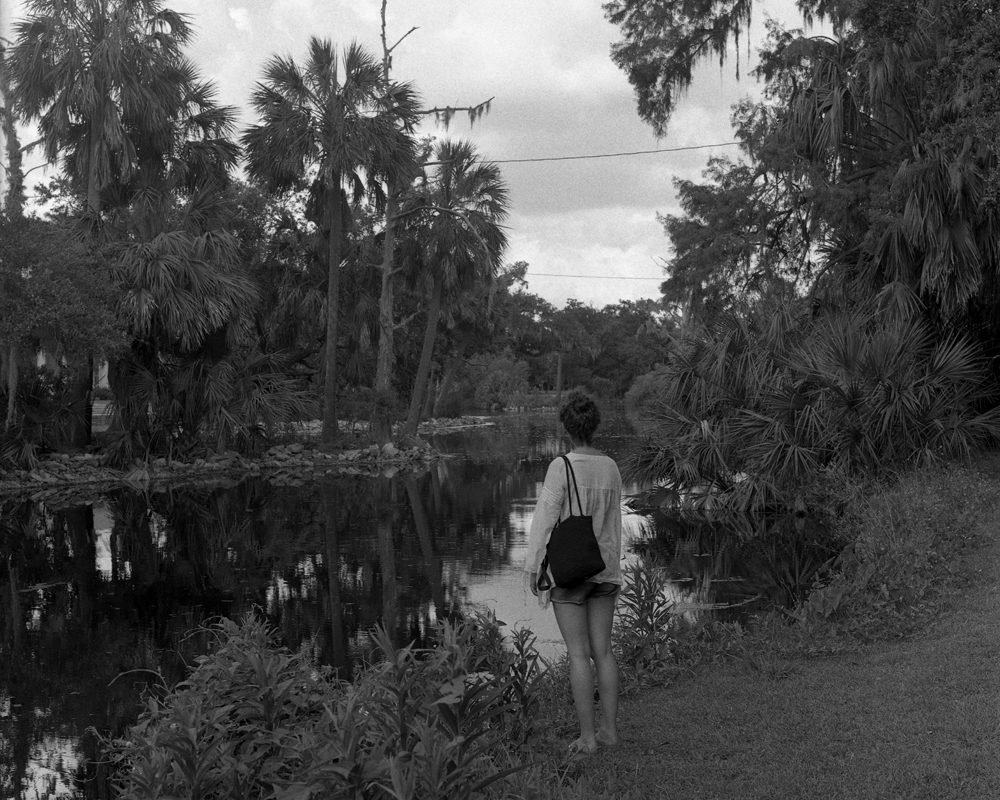
‘On a wall in Joshua Mann Pailet’s ‘ A Gallery For Fine Photography’ in New Orleans, hung the Edward S. Curtis photograph ‘Before the white man came’, edition 291 for $4,500. It was a photograph taken in North America in 1924 and features a Native American woman, wrapped in skins from her waist down, her hands balancing a bowl on her head. Her back is to the camera and before her lies a winding riverbed with palm trees hanging overhead. It has always fascinated me as a photograph; it seems to embody Curtis’ romantic admiration for the past. To the point where he has almost forgotten his presence within it, so intent he was on its subject’s preservation. I gazed at it longingly for another moment before heading back out into the 40-degree heat that was New Orleans in July. Later that day we took the tram up to the City Park, hoping to get some relief from the heat but instead running from shadow to shadow of the large palms and deep south oaks hung with spanish moss. Suddenly finding myself alone, I rounded a bend by a lake and came out onto a grey stone bridge that overlooked the water. As I turned, I gasped at what lay before me. There to the left of the bridge was Curtis’ scene. The water twisted round into the distance and palms, hung heavy, lined the banks. There even lay a small grassy patch to the right that stuck out slightly from the bank, where the lady in the picture stood. At that moment the others came around the corner and I grabbed one, standing her on the grassy spot and pulling out my camera. I moved around for a moment and found the shot. A moment from another time and another place, on a mid summer’s day in Louisiana.”
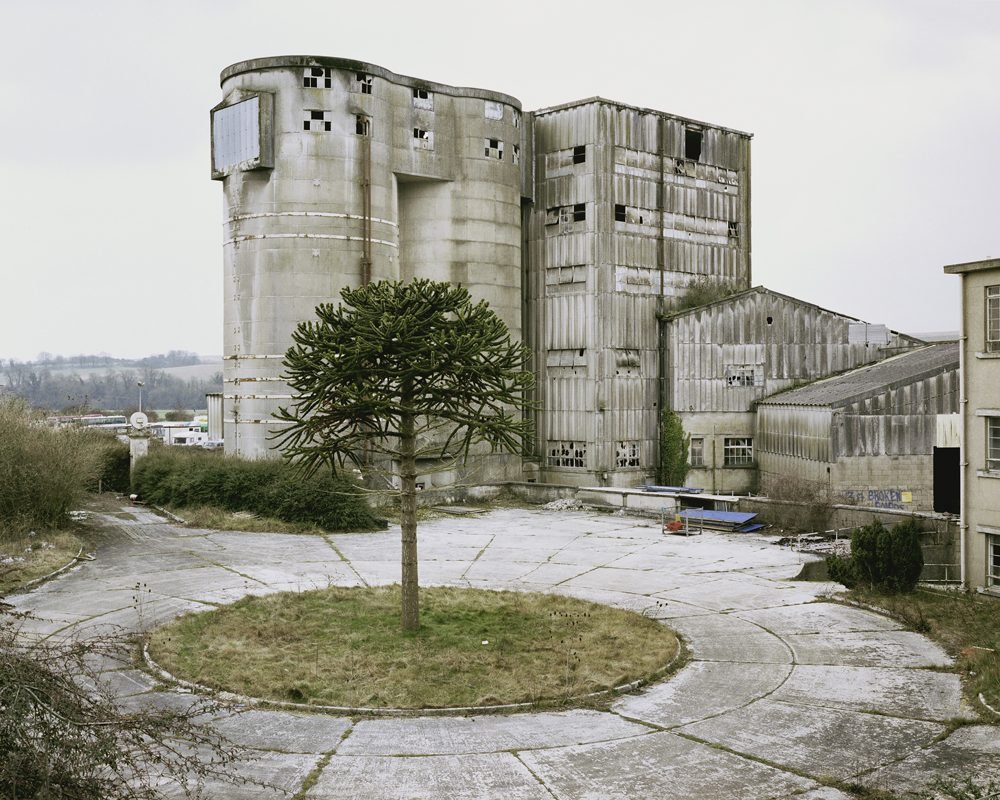
“This photograph was taken in the 2nd year of my Degree course at Brighton University in 2005. Up until I took this photo I really wasn’t sure how to progress my photographic practice, I wasn’t really any good at thinking of a concept first and then making the work to support that concept. What I enjoyed about photography and still do today was to randomly explore my surroundings and capture areas of the landscape that I found interesting and that I thought had a beauty to it, and then eventually a project would reveal itself. I would also often be disappointed with the outcome of the photos, having found an interesting subject to photograph I would be really excited to see the outcome but quite often felt the outcome didn’t live up to my expectations. ‘Monkey Puzzle’ was really one of the first photos that managed to live up to my expectations of what I was trying to achieve when I took the image. The photo is taken at the old Cement works in Shoreham and i really just felt all the elements came together to create an image that had a real beauty to it, especially in the relationship between the Monkey Puzzle Tree and the grey crumbling building, its been 8 years since i took it and i still like it now. Ironically although responding to this image has led to different projects evolving, I have never used it in a project as I have felt that it has never really fitted in. As I loved the photo I had it on my website as a single image, which my peers often couldn’t seem to understand and would often laugh about. It is now part of a collection of photographs that I am calling Monkey Puzzle, the collection isn’t suppose to work as a series but instead they are really just a collection of stand-alone images that I have taken that I find interesting, maybe they will evolve into something else further down the line.”
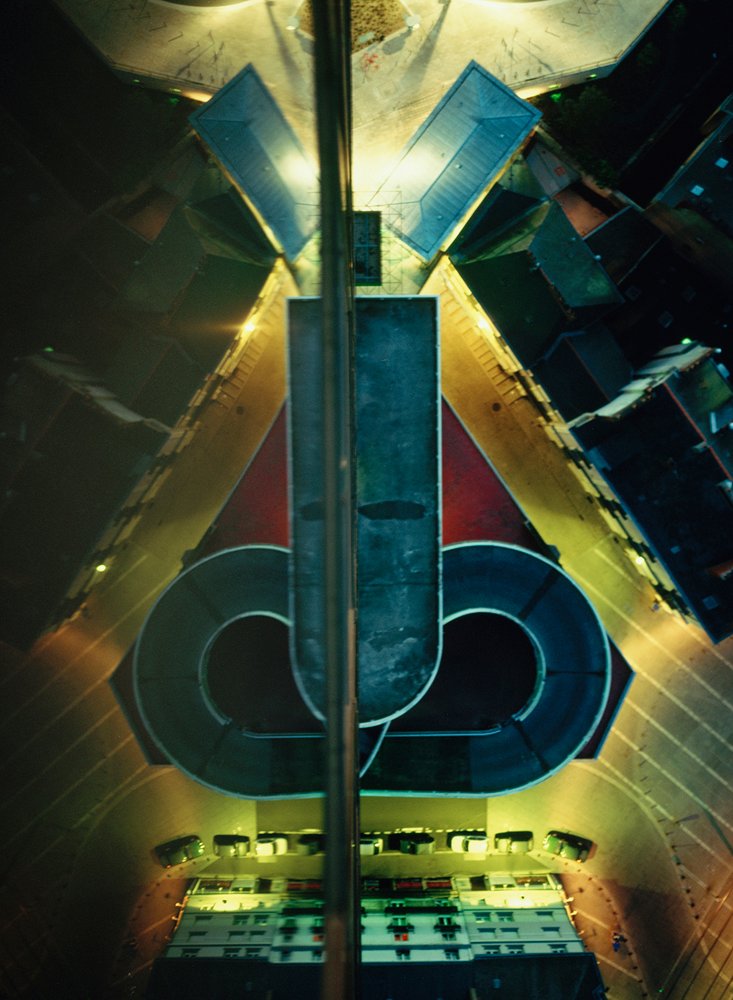
“The work shows the Tower of Nantes, and I made it from the top floor of the building that dominates the sky-line of the old city. Despite the suggestive promise of its modernist floor-plan – sci-fi meets erotica – it only houses the municipality of Nantes.”
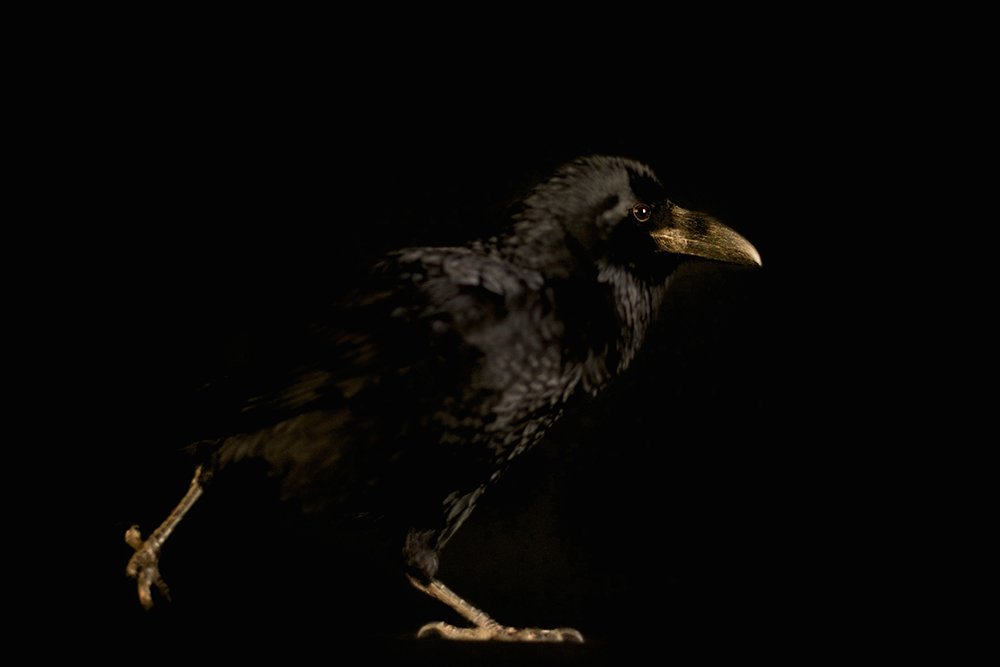
I photographed this Raven as part of a series, As the crow flies, about my obsession with crows for my Major Project at Westminster University in 2013. Whilst technically not the best shot, the shoot itself was an absolute privilege. To spend time in such close proximity to such an amazing and intelligent creature was an experience I’ll never forget. I spent about an hour in a darkened studio with this beautiful Raven, who hopped about at lightening speed, onto my shoulder, on top of my lights, staying still for mere mili-seconds, and testing my ability to focus!”

“When I first came up with the concept for ‘The Shot I Never Forgot’, four images appeared in my head within a few minutes. This image, taken whilst studying for my degree was one of them because it marks a significant learning point in my photographic practice. I was trying to create a series of images that were constructed – something I had never done before and have not really attempted since. My concept was to make surreal scenes that made comment on the urbanisation of our lives, in particular our leisure activities. For the most part, the pictures I made were quite unsuccessful – however, I have always enjoyed this one and returned to it time and again. In part, I think it works due to the rather striking pose and styling of Ahmet Unver, who kindly agreed to play golf around a car park for the afternoon. I have always enjoyed how the shot is framed and how Ahmet genuinely looks like he is sizing up his shot towards the tower block. Whilst I never went anywhere with this series of images – I found the experience a poignant lesson. Constructing an image forces you to consider how to build narrative and meaning into a Photograph by controlling all aspects of it, ideas which can be applied to any style of Photography. Whenever I look at this image, I wonder why I did not pursue the constructed image idea further within Photography as it offers a uniquely alternative way to work with the medium.”

“This image represents a change in direction in my personal work, a new beginning in my full moon project. The work was created on a warm summer’s night in 2010 in a field somewhere between New Heaven and Eastbourne in the South East coast of UK. This is a remote location situated between the rail tracks and the beach, it’s mainly a flat-ish land with a low vegetation and some concrete pathways (which apparently were built by the army during the World War II to be able to take heavy equipment and tanks near the beach). The image marks the birth of the Licht series which has been published and exhibited widely since. Up until this point my full moon project was mainly about the landscape itself, focussing on locations being illuminated by the soft, romantic and mysterious moonlight. I remember that the project was already evolving at the point, with the exposures getting much longer (playing with the idea of representing a night as if it was a day) and myself paying more attention to the thought process during the time the exposure was being made. Working at night in quiet and remote locations gets your brain going in unusual directions, The process can become quite meditative and self-reflective. Suddenly the idea came that instead of waiting behind the tripod, I should become part of the photograph, so I started interacting with the landscape, gently painting it with light and leaving clues of my own trace as I moved through the frame. After seeing the result of the first test I decided I had created something I needed to explore further. The project, “Licht series”, has evolved further from that initial point and became slightly more polished and controlled, which somehow made me exclude this image from the series in the final edit.”

“I went to meet my parents one summer at their holiday apartment. A few weeks before I left my father said he wanted to give me my grandfathers box camera. The trip was meant as a get away from picture making so I didn’t bring my own camera or any agenda for making pictures. However I decided to take a few rolls of film with me so I could try out the family heirloom. I remember it being a bugger to load, there was lots of fumbling with the film and cursing. Not wanting to purposely make pictures I just took the camera with me as I went about doing other things. I quickly realised that when I did decide to make a picture it never burdened me with any mental activity before I released the shutter. Perhaps its because it didn’t feel like a camera but more of a tin box into which my grandfather and I stared and left some quiet thoughts.”
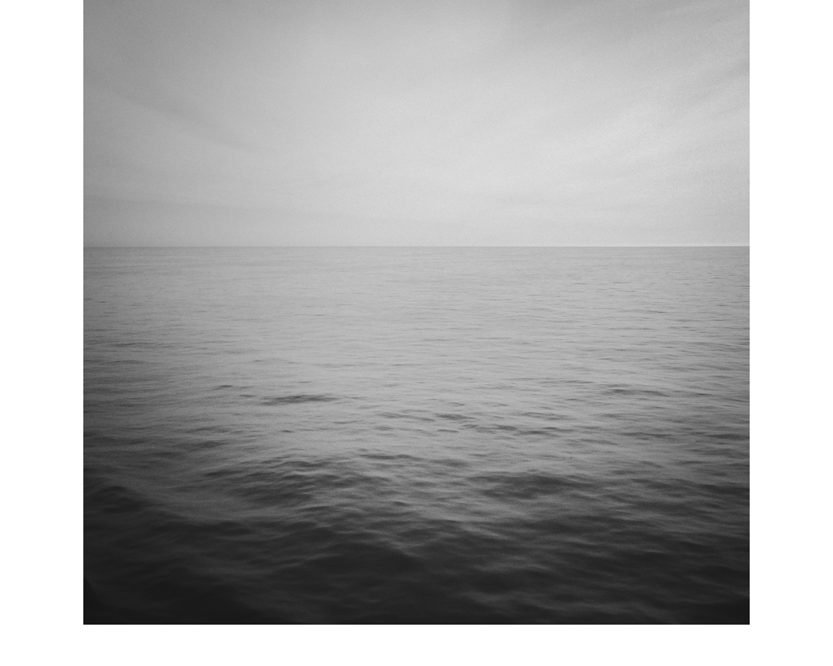
“After 4 years, 23,000 miles and 143 locations, I thought I had completed the photography for The Last Stand in Norway. But no, six weeks later, I now found myself on the ferry, returning from northern France. Ironically I had also ended up having to return to Norway for an immediate second shoot after all the film from the first trip was fogged in camera. But after editing the images for the project’s book, I realised an extra final trip was needed. So with a car boot packed with gear and supplies, I spent four days along the Normandy coast photographing at 8 locations, full of bloody and horrific memories, to finally complete the work. As I crossed the halfway point in the journey I thought this must be where La Manche and the Channel meet. This time it truly felt like the end of the project.”
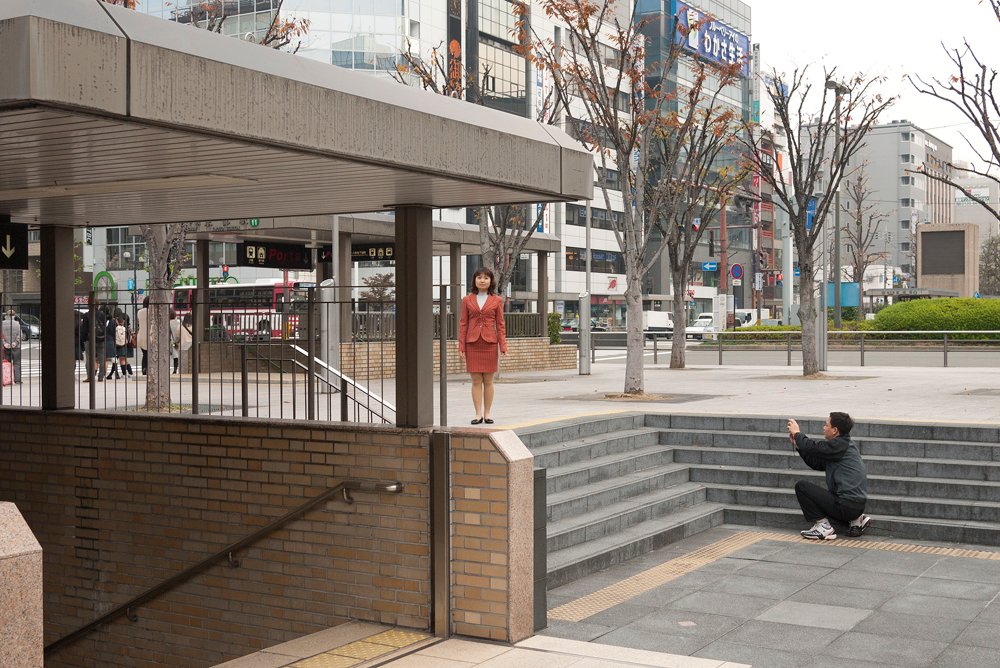
“In November 2011, 2 days after my 30th birthday, I visited Japan with a friend of mine. As an architectural photographer, I’d hoped to photograph some of the architecture in a country that has a vernacular so different to our own. When I got there I quickly realised it was going to be far more difficult than I thought as I wound my way through legions of Japanese tourists to get the angle I wanted on the building. Sitting in in a cafe at Kyoto Train Station I realised the much more interesting project would to be stand back and photograph tourists photographing each other. This was one of the first I took, and I love it! There’s only about 3 photos I’ve ever taken that I’d say that about as well! Her stance, her dress and the muted colours came together perfectly, just at the moment she turned and noticed me. That trip, and this mini-project, changed the way I work and for that reason this is most definitely a Shot I Never Forgot.”
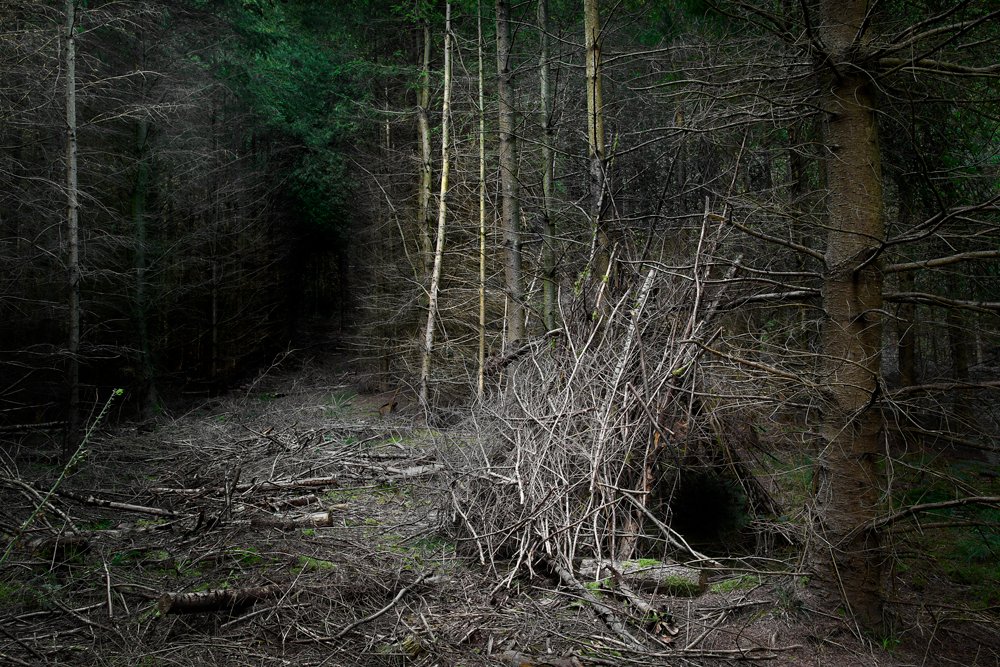
“The image was taken in Puddleton Forest just outside Dorchester in Dorset, UK. This particular image was made in an area of the forest which is predominantly very dark pine plantation. There are a few people walking dogs on the paths but as you go into the denser forest it feels very isolated. Earlier in the day I had found a treehouse in the woods and it had obviously been recently occupied. It is unusual to find actual habitation in those woods and it changed the atmosphere. It looked as if the people using it had been forcible removed from the area because there was rubbish all around it and a lot of signs of destruction. I prefer to work in forests where I am unlikely to be disturbed or observed or perhaps feel any threat, but this discovery had unnerved me and I felt a heightened awareness of the forest and sounds around me. This image strongly evokes those uncomfortable feelings for me. The darkened pathway leading into the background suggests my state of mind and sense of discomfort. The suggested presence of other people in the woods is an important theme throughout my work and for this reason I am glad to have revisited this image and bring it back into the series where it belongs.”

“This photo was taken at on April 1st 2009. I like many other photographers where photographing the G20 protests in central London. There were more photographers than protesters, but at least I could relax in the fact I was on assignment for the New York Daily News. I remember getting excited when the light was getting low and watching this posh kid wearing a Union Jack blazer who began attacking a burning dummy with a walking stick. He was loving all the attention along with the worlds press. When I sent this image it was never used as someone had managed to get a photo of the Iain Tomlinson (who was unlawfully killed) and that became ‘the story’. So despite getting excited about taking this photograph, in a way, this was just another generic view of bad craziness, the frustration of youth and how everyone nowadays has a camera.”

“I took this image back in 2004. At the time I didn’t know exactly to which series it should be belong to nor should it start a whole new series. All my series deals in one way or another with the southern neighborhoods of Petach-Tikva (my immediate surrounding), without a romantic gaze or impressive insight, but rather as a case study for common urban neighborhoods and cultural taste in a western society. I don’t think photography say something, people do. For me, Photography in the worst case is a shallow cliché, and in a good case a pies of information presented originally, which swallowed in endless mesh of political and cultural discourses. There are several things that I like about this image which make me return to it occasionally; the extensive occupation with borders and the innovation dealing with it. Almost everything can define a border; Concrete wall, different iron fans, pieces of wood, tin plate and hedges. Other themes upper as well; emphasized nationalism (flags), fantasy of exotic life style (round parasol), and obvious lust for better living environment (rooted grass) and of course Middle Eastern sun light.”
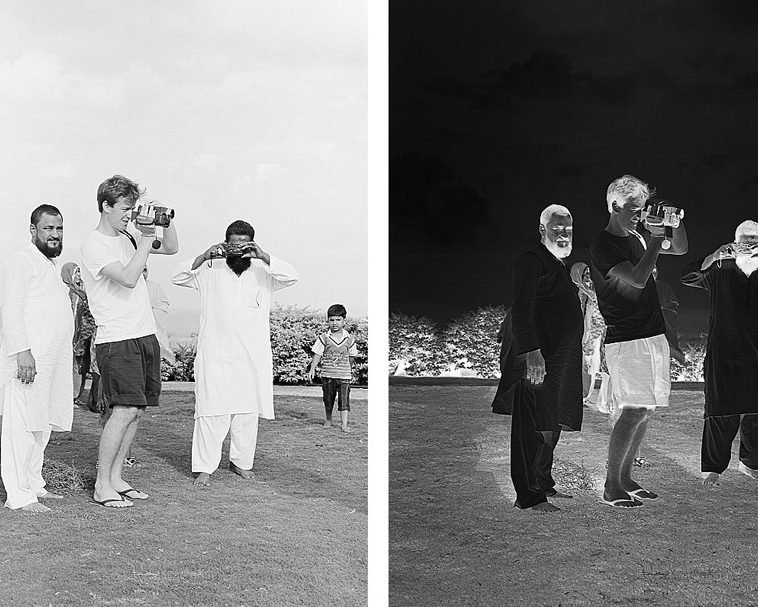
“We were on an Artist residency in India, and we found ourselves at the top of Udiapur Mountain, there was this family and who were having problems with their video camera. Having seen us with all our cameras they came over and ask us to fix their. With minimal camera repair knowledge we realised that the camera was completely fucked, and despite us telling them repeatedly it wasn’t working they asked one of us to record their family. So whilst I filmed, Luke was getting some great pictures of the family members and this one of me supposedly filming. I love the guy on the right taking a picture. Don’t think we will ever forget this moment.”

“In October 2007 I was in St Ives for a week’s holiday with my (then) girlfriend. I’d graduated from the Photography course at the University of Brighton that summer and I had hardly picked up a camera since. After three intense years immersed in the subject I needed a break, but by October I was keen to get out and take some pictures again. Much to my girlfriend’s disappointment my large-format 5×4 camera went on holiday with us. One afternoon I ventured out alone with my gear. The light was beautiful, bright and perfectly overcast, a large-format photographer’s dream. It might sound strange to some people, but I remember finding it really difficult to know what to photograph. At University I’d become used to working on projects based on specific ideas and I felt lost just wandering around without any particular purpose. It took me a while, but slowly, over the course of the afternoon, I rediscovered the joy of taking photographs, just for the fun of it. I have a new girlfriend now.”
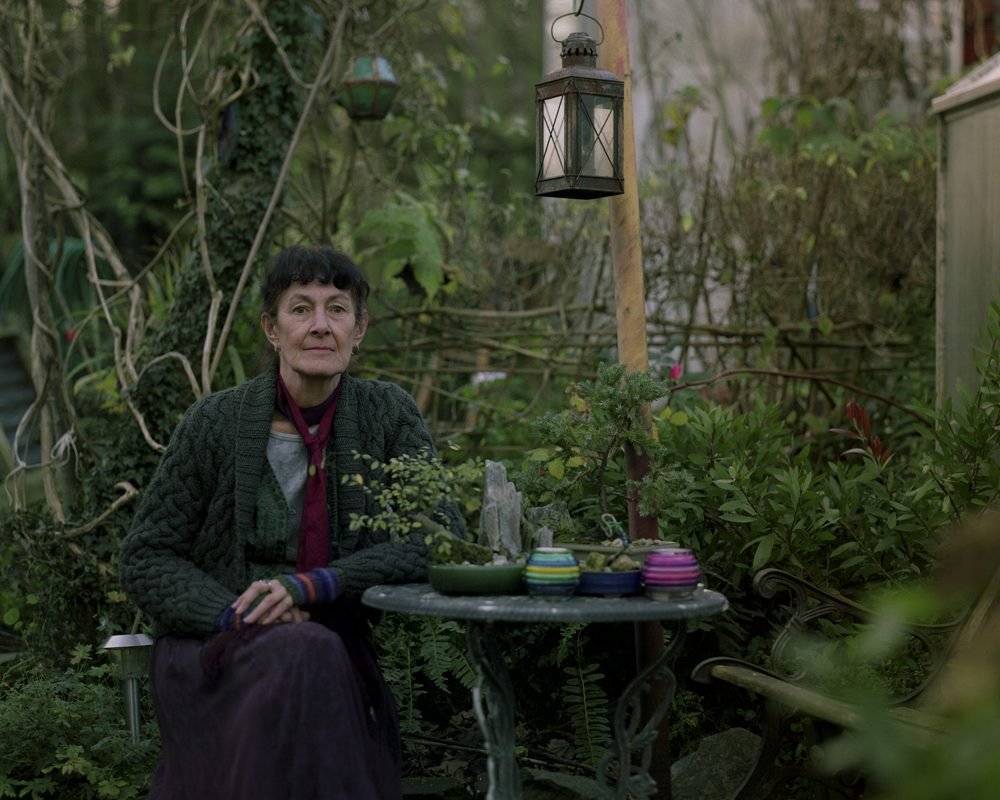
“This is a photograph I took of my mother in 2008. My mother had been quite ill for sometime and had been in and out of hospital after having collapsed several times. She was subsequently diagnosed with chronic obstructive pulmonary disease, and this was obviously a very fraught time for me and my family. This picture was taken on a Horseman 45HD large format view camera, in my mothers back garden of her council house in Whitehaven, Cumbria. It was a bitterly cold winters day and it took me nearly an hour to set up the shot. I spared my mum the ignominy of freezing to death in her garden and set the shot up without her, until the point at which I needed to press the shutter. This was not one of the easiest photographs I’ve ever had to take, as anybody who knows my photography will attest to the fact that people are the last thing you’ll find in any of my images. Portraiture for me is anathema and making this image was definitely imbued with a sense of foreboding and necessity, and it was very much on my mind that this might be the last opportunity I have to take this shot. This was exacerbated by the crippling cold and the fact that the neighbour’s Rottweiler was tearing up and down the garden, barking angrily, with only the flimsiest of fences and a handful of cats to protect me. Given the fact that I mostly photograph the urban and industrial landscape in a studied and objective manner, I was pleasantly surprised by the outcome of this photograph. I haven’t taken many portraits since, and certainly wouldn’t do so for my artistic or professional practice. I’m happy to say that my mother hasn’t kicked the bucket yet, even though her condition is technically terminal. However, the prospect of one’s own mortality, and the loved ones that surrounds us, becomes ever more poignant as time progresses.”
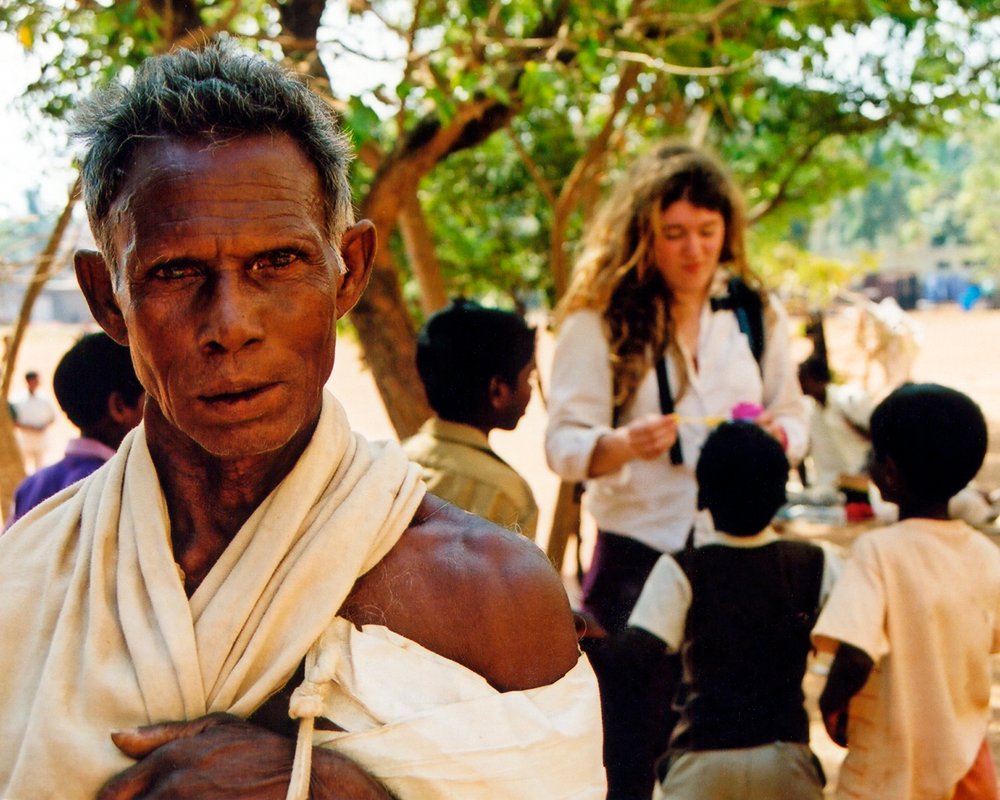
“I took this photo during the aftermath of the 2005 Tsunami in the southern India. When I first saw the image I couldn’t bare to look at it. Something about the man’s gaze troubled me and left me feeling rather uncomfortable. Here is a photo of a man who had suffered huge trauma and there was I, intruding on his grief and photographing him. What did he get out of the relationship? So I never showed it to anyone. But it’s an important image for me because it made me question the role of the photographer in situations of trauma and high drama. It made me question whether the photograph can still be useful as a tool for social change, in today’s world filled with imagery. It made me question lots of things about photography actually. So I’m very pleased I took it. And I’ve never forgotten it.”

“Shortly after submitting my original image to the ‘The shot I never forgot’ I began to regret my decision. All that self reflection had dislodged the image from my fascination. It was now running free on the internet and I had totally lost interest in it. There are a great deal of photographs in my collection which I continually return to and yet find difficult to place within a series. So when John announced he was going to exhibit them all it was easy enough for me to to come up with a replacement. I wanted to look again at this photo of the The Agglestone which is again a landscape, or perhaps an enormous still life. The Agglestone is a 400 tonne piece of iron-cemented sandstone in Dorset, not far from Corfe and was the destination of a holiday walk with family and friends once. I think I am simply drawn to its immense age and scale and how that idea contrasts with the ephemerality of that afternoon stroll.”
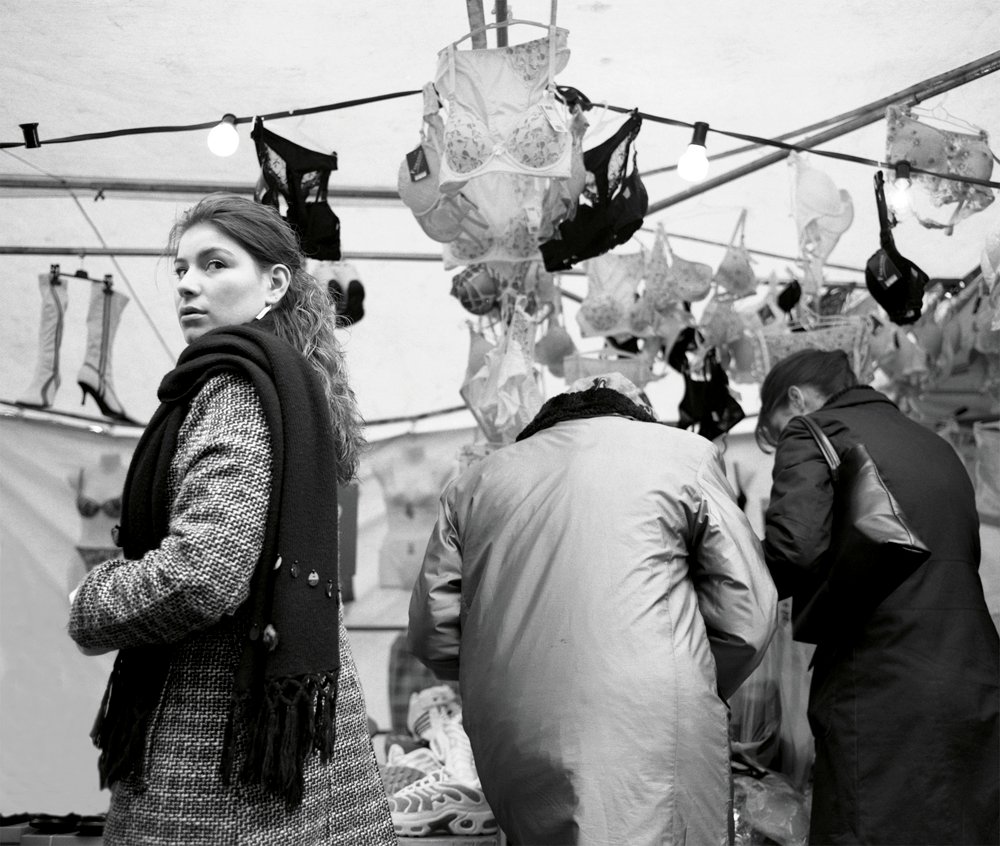
“I made this photograph on a trip to Berlin in my Foundation Year. Like so many aspiring photographers I hadn’t used colour film yet so every image was black and white. The sky was consistently overcast which in hindsight made the experience good for monochromatic vision. I had borrowed a medium format Bronica from Filton College in Bristol and was just getting used to looking down onto the ground glass. It was a wonderful experience to discover photographic emersion; the feeling that you’re removed from a situation, that you’re somewhere else looking in. All those elements, the black and white film, the camera and the fresh perspective add to this image but it’s the Berlin Lady that really makes it. She is looking at me, looking at her through the camera. It takes her gaze over the frame giving the scene an element of Film Noir mystery. She is very attractive. I have to admit I fell a little bit in love with her. The image stands alone in a sea of single images from that trip. The notion of making a consistent series was foreign to me so I came back with a lot of exciting but fragmented photographs; perhaps something closer to memory. I still consider the image to be one of my best though. And I’m still a little bit in love with the Berlin Lady.”
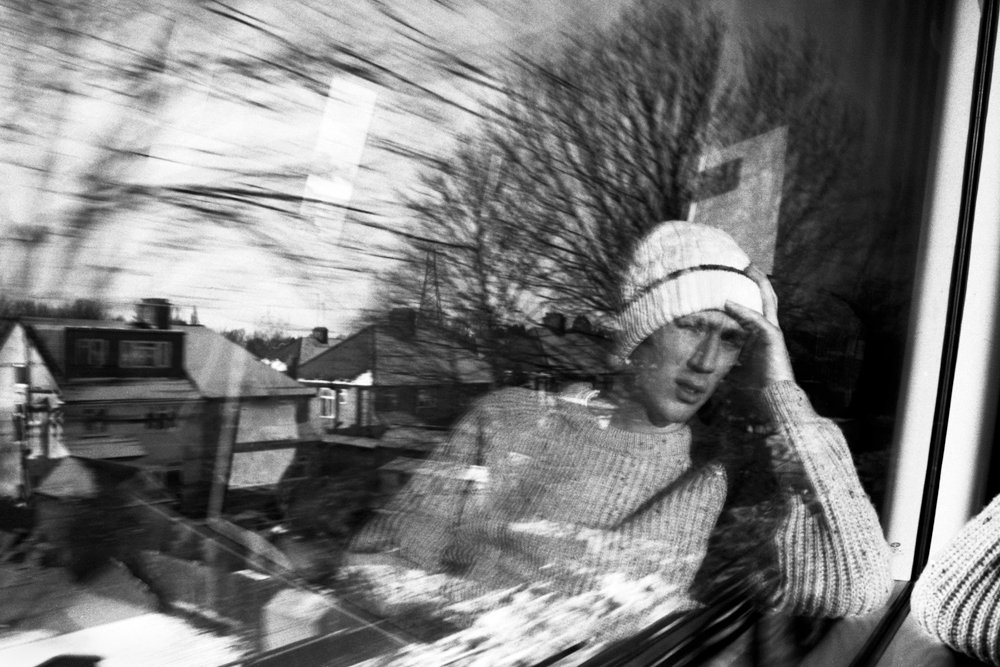
This is the photograph that first inspired this project. It was taken over a decade ago, I think in 2001 and it has always stayed with me. I was on a train journey to Hamble-le-Rice (near Southampton) with a close friend. We were meant to be visiting a friend in Glasgow for the weekend, but severe snow stopped us being able to fly, so we decided to go on a random road trip and see where the weekend took us. At the time, we were both processing a lot of personal issues and the weekend turned into a 3 day long debate about the meaning and philosophies of life, which acted as a sort of therapy for the both of us. The weekend remains with me as one of the most poignant in my life. I took this portrait on a whim, during a brief period of silence after a particularly hard and heavy discussion (about spirituality – if my memory serves correctly). For me, the picture captures the essence of this moment perfectly and the mood of the trip in general. I never take portraits and it rarely occurs to me to photograph people. However, in this moment, my friends face was so full of expression and meaning, I fired the shot off as he pondered the world out of the scratched and grubby train window. I love the stillness and depth of his expression, and the glimpse of the landscape passing him by and often wondered if he saw his own expression in the reflection. I find the image beautiful and troubling because of the memories I associate with it so I have always kept a copy of it next to my desk to act as a memory of my very dear friend and a life affirming trip. Whilst looking at the portrait one day, I began to reflect on the number of significant pictures that Photographers take for their own satisfaction and never think about sharing with others. I began to contact artists and asked them if they would be prepared to share a shot they never forgot.”